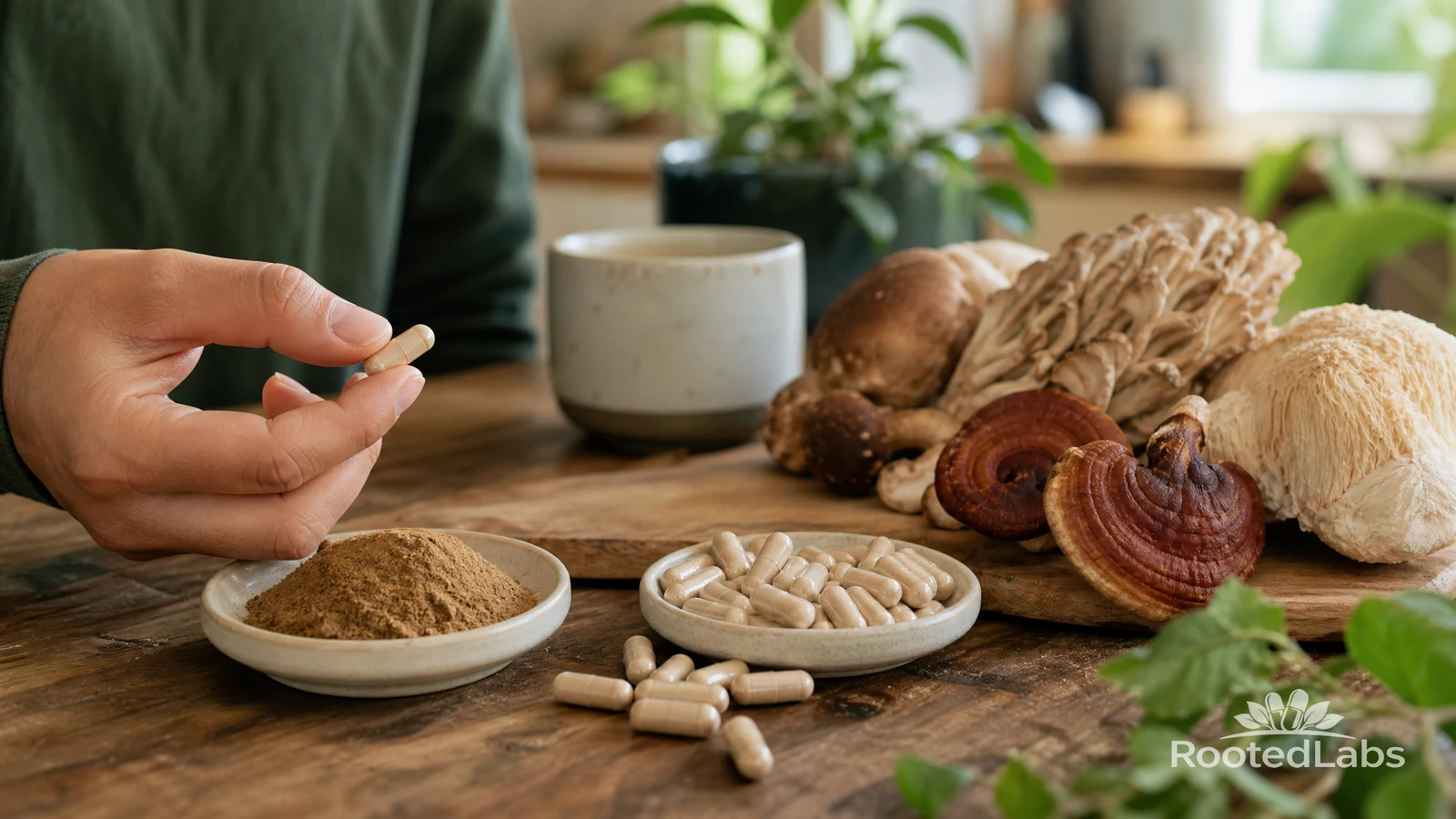
A mushroom supplement label can say “extract” and still leave the most useful question unanswered: are extracts standardized? For anyone building a dependable daily wellness routine, that detail matters. An extract may concentrate compounds from a botanical or mushroom, but standardization is what tells you whether each serving is designed to deliver a consistent measured level of a specified constituent.
That does not make every standardized product automatically better. It does give you a clearer place to start. When a formula states its extraction standard and identifies the mushroom material used, you can compare it on more than marketing language.
What standardization means on an extract label
Standardization is a quality-control approach. The manufacturer sets a target level for one or more naturally occurring compounds, then tests the finished extract to confirm it meets that specification. In functional mushroom supplements, labels often standardize for polysaccharides, beta-glucans, or another identified compound group.
Think of it as consistency from bottle to bottle. Whole mushrooms are agricultural materials. Their composition can shift with the species, growing conditions, harvest timing, and processing method. A standardized extract is processed and tested to reduce some of that variability.
For example, a Maitake extract standardized to 50% polysaccharides is formulated to provide an extract with that stated polysaccharide specification. That gives a shopper a concrete number to evaluate alongside the serving size. A label that simply says “Maitake mushroom powder” may still contain mushroom material, but it does not provide the same indication of concentrated, measured extract content.
Standardization should not be confused with a promise of a particular health outcome. Supplements support wellness routines, and individual needs differ. What standardization offers is formulation discipline: the product is made to a defined specification rather than relying on an unspecified raw powder.
Are extracts standardized across all supplements?
No. Extracts are not automatically standardized, and the word “extract” alone is not enough to establish potency. Some extracts are standardized to a named percentage, some are tested internally without stating a standard on the label, and some products use the term broadly without offering meaningful detail about the finished material.
The same is true across mushrooms, herbs, and other botanicals. Two capsules can list the same ingredient and milligram amount while delivering very different materials. One may contain a concentrated fruiting-body extract with a disclosed standard. The other may contain a blend of powder, mycelium, and grain-grown material with no stated active-compound target.
This is why milligrams are only part of the picture. A 500 mg serving tells you how much material is in the capsule. It does not, on its own, tell you whether that material is a whole powder, an extract, what part of the mushroom was used, or whether its composition is consistently tested.
What a standardization percentage can and cannot tell you
A disclosed percentage is useful because it creates accountability. If a label says 50% polysaccharides, shoppers can see the manufacturer’s declared specification and compare it with products that disclose different standards or none at all.
Still, the number needs context. “Polysaccharides” is a broad category, not a single compound. Testing methods can differ, and labels do not always explain exactly which polysaccharides are being measured. A high percentage should prompt further questions, not end them.
Look for the complete formulation story: the mushroom species, the mushroom part, the extract amount per serving, the stated standard, and the testing or manufacturing transparency behind it. A precise-looking percentage attached to a vague source is less informative than a percentage paired with clear sourcing and a straightforward Supplement Facts panel.
Beta-glucan disclosure can also be helpful when available, particularly because beta-glucans are a well-recognized class of mushroom polysaccharides. But no single label metric captures quality by itself. The goal is not to chase the biggest number. It is to choose a formula whose numbers are clear, relevant, and supported by an honest ingredient description.
Fruiting body matters alongside the extract standard
For mushroom supplements, the source material deserves as much attention as the standardization claim. The fruiting body is the visible mushroom structure traditionally recognized as the mushroom itself. Mycelium is the threadlike root structure of fungi, and it is often grown on grain in commercial production.
Neither term should be treated as a shortcut for every quality question. But when a brand uses grain-grown mycelium, the final material can include residual grain. That may dilute the proportion of mushroom-derived compounds in a finished capsule, especially when the label does not disclose how much mushroom material versus grain is present.
A 100% fruiting-body Maitake extract provides a cleaner comparison point. You know the formula begins with the mushroom part named on the label, rather than an unspecified combination of mycelium and growing medium. Pair that with a stated extract standard, and the label begins to answer the questions that matter most: what is it, how much is there, and what specification is the manufacturer targeting?
At RootedLabs, the formula uses 500 mg of standardized Maitake fruiting-body extract per serving, standardized to 50% polysaccharides. The approach is simple: 100% Fruiting Body, 0% Filler. It is a specification shoppers can see rather than a claim they have to take on faith.
How to read a mushroom extract label
A few direct checks can help separate a transparent formula from an unclear one. You do not need a lab background to read the basics.
- Identify the mushroom part. Look for “fruiting body” rather than assuming every mushroom ingredient comes from the same source material.
- Check the serving amount. The Supplement Facts panel should tell you the milligrams of extract per serving, not just the bottle’s total blend weight.
- Find the stated standard. A percentage of polysaccharides or another identified constituent is more useful than the word “potent” or “premium.”
- Review the rest of the formula. See whether there are unnecessary fillers, proprietary blends, or ingredients that are not clearly quantified.
Also consider what is not on the front label. A long list of wellness claims cannot replace clear specifications. Transparent brands make it easy to find the ingredient amount, source material, capsule type, and suggested use without asking shoppers to decode vague language.
Extraction is only one part of formulation quality
A well-made mushroom capsule should be evaluated as a complete formula. Extraction can concentrate selected compounds, but capsule quality, supporting ingredients, manufacturing controls, and daily usability all influence whether a product fits your routine.
For example, turmeric and ginger are familiar botanical ingredients used in everyday wellness formulas. Black pepper extract is often included in botanical blends, while magnesium citrate may support the formula’s broader daily-routine positioning. The key is not adding ingredients for a longer label. Each ingredient should be clearly listed with its amount and have a practical reason for being there.
Vegan HPMC capsules are another useful detail for shoppers who want an animal-free option. Manufacturing location matters, too. US manufacturing does not eliminate the need for careful sourcing and testing, but it can provide a clearer quality-control framework when paired with transparent product information.
Choose consistency over label drama
The best supplement is one you can understand and take consistently. A complicated protocol is rarely necessary for a basic mushroom routine. Taking a clearly labeled capsule with breakfast, coffee, or your morning water can be more sustainable than buying a powder that stays in the cabinet.
Start with the suggested serving on the product label and give your routine time. Supplements are not quick fixes, and more is not always better. If you are pregnant, nursing, managing a medical condition, taking medication, or preparing for surgery, speak with a qualified healthcare professional before adding a new supplement.
A standardized extract will not answer every question about a product. It does answer a valuable one: whether the manufacturer has defined and disclosed a measurable target for the extract. When that standard is paired with 100% fruiting-body sourcing, a clear Supplement Facts panel, and a capsule you will actually take, quality becomes easier to recognize - and easier to keep in your day.