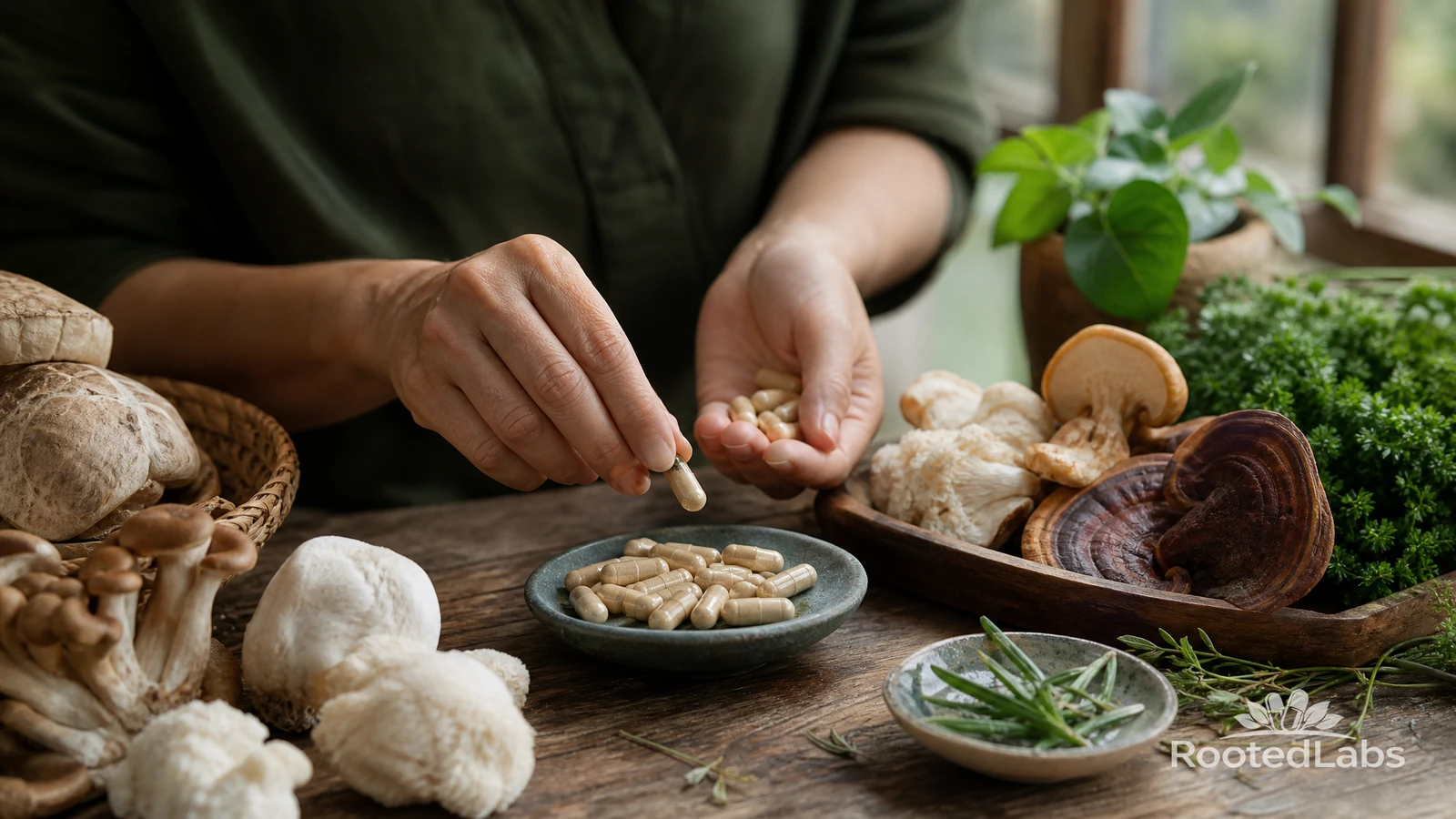
A mushroom supplement can look premium from the front label and still leave out the details that matter most. Terms like “mushroom blend,” “full spectrum,” and “dual extract” may sound reassuring, but they do not tell you what part of the mushroom is used, how potent the extract is, or how much of the capsule is actually mushroom.
Knowing how to choose fruiting body extracts comes down to reading past the marketing language. A dependable daily supplement should make its mushroom source, active-compound standardization, serving size, and supporting ingredients easy to verify. That is how you separate a consistent wellness tool from an expensive mystery capsule.
Start With the Part of the Mushroom Used
The fruiting body is the visible, mature mushroom - the cap, stem, and structure that grows above its growing medium. It has a long history of traditional use and is the portion many shoppers expect when they buy a mushroom supplement.
Mycelium is different. It is the root-like network a fungus uses to grow, often cultivated on grain such as rice, oats, or sorghum. Mycelium is not inherently poor quality, and it has its own place in mushroom cultivation and research. The problem is transparency. When mycelium is grown on grain and harvested without being separated from that grain, the finished powder can contain a meaningful amount of starch from the growing medium.
That matters because a label that simply says “mushroom mycelium” or “mushroom biomass” may not tell you how much mushroom-derived material is present versus residual grain. If your goal is a concentrated mushroom extract, look for a label that clearly states 100% fruiting body.
For Maitake in particular, this distinction is useful because shoppers often seek the mushroom’s naturally occurring polysaccharides. A fruiting-body extract gives you a more direct, clearly defined starting material than a vague mushroom-and-grain blend.
Choose an Extract, Not Just a Mushroom Powder
A whole mushroom powder is exactly what it sounds like: dried mushroom ground into a powder. It can be a simple ingredient, but it is not necessarily concentrated. The amount of active compounds can vary with the mushroom material, growing conditions, harvest, and processing.
An extract begins with mushroom material and uses water, alcohol, or another appropriate process to draw out selected compounds. The resulting extract can then be concentrated and standardized. This makes it easier to formulate a consistent serving from bottle to bottle.
The key word is not “extract” alone. It is “standardized extract.” Standardization means the manufacturer measures a specified compound or compound group and formulates to a defined level. For mushroom supplements, that often means polysaccharides or beta-glucans.
A label that lists a mushroom extract without a standardization percentage may still contain an extract, but it gives you less context about potency. A label that states both the extract amount and its standardization gives you a clearer basis for comparison.
For example, 500 mg of a Maitake extract standardized to 50% polysaccharides tells you much more than 500 mg of generic Maitake powder. It identifies the mushroom, the amount, and the manufacturer’s potency target. It does not guarantee a specific personal outcome, but it does show a more disciplined approach to formulation.
Look Beyond the Biggest Milligram Number
More milligrams do not automatically mean a better mushroom supplement. A large number may represent whole powder, a low-potency ingredient, or a proprietary blend that conceals the amount of each mushroom.
Instead, assess the label in context. Ask three simple questions: How much extract is in each serving? What is it standardized to? Is the source clearly identified as fruiting body?
A modestly sized serving of a standardized fruiting-body extract may be more meaningful for a daily routine than a larger serving of unstandardized powder. This is especially true for people who want a consistent formula instead of rotating through products with unclear potency.
You should also check whether the amount is listed per capsule or per full serving. Some labels highlight a number that requires taking several capsules. There is nothing wrong with a multi-capsule serving, but the routine should be clear enough to fit your day.
Read the Supplement Facts Panel Before the Front Label
The front of a bottle is designed to catch attention. The Supplement Facts panel is where a brand earns trust.
A transparent mushroom supplement should identify the mushroom by its common name and, ideally, its botanical name. It should state whether the ingredient is fruiting body, mycelium, powder, or extract. If the product is standardized, that percentage should be visible rather than implied by a trademarked blend name.
Be cautious with proprietary blends. They are allowed on supplement labels, but they can make comparison difficult because the label provides only a combined total for several ingredients. A blend listed at 1,000 mg may sound substantial, yet you cannot know how much of that total comes from the mushroom you want.
The same principle applies to “complexes” and “matrixes.” These terms are not automatically red flags, but they should not replace clear ingredient amounts. When a brand is confident in its formula, it can usually tell you what is in it and why.
Check the Standardization Claim With Care
Polysaccharides are commonly used as a mushroom-extract marker, but not all polysaccharide claims mean the same thing. Some testing methods may capture starches as part of the total polysaccharide number. That can be especially relevant when the source includes grain-grown mycelium.
Beta-glucan testing can provide a narrower measure, depending on the method and product. Yet beta-glucan percentages should still be interpreted alongside the full formulation. The mushroom source, extract process, dosage, and transparency of the label all matter.
There is no single percentage that makes every product “best.” A high number without a disclosed mushroom source is less useful than a clearly labeled fruiting-body extract with a stated standardization target. Look for evidence that the number has meaning, not just marketing appeal.
Consider the Full Formula, Not Only the Mushroom
A well-built mushroom supplement may include complementary botanicals or nutrients. Turmeric, ginger, black pepper extract, and magnesium, for example, can support a practical daily wellness formula when they are included at disclosed amounts and for a clear purpose.
Supporting ingredients should add function, not create clutter. If a product contains a long list of herbs, stimulants, flavoring agents, and vague blends, it may be harder to understand what you are taking and why. Simpler is not always better, but every ingredient should earn its place.
Black pepper extract is one example where specifics matter. Piperine is often used to support the absorption of certain botanical compounds, but it may interact with some medications. Anyone who takes prescription medication, is pregnant or nursing, or manages a health condition should review a new supplement with a qualified healthcare professional.
Also check the capsule itself. For many shoppers, vegan HPMC capsules, straightforward excipients, and no artificial colors or unnecessary fillers are practical signs of a clean-label approach.
Verify Manufacturing and Quality Practices
Supplement quality is not determined by a label claim alone. Responsible manufacturing practices help support consistency, cleanliness, and accurate labeling.
Look for products made in facilities that follow current Good Manufacturing Practices, often called cGMPs. US manufacturing can make it easier for a brand to maintain oversight, though country of manufacture alone is not proof of quality. What matters is whether the company communicates its standards clearly and can stand behind its testing and sourcing practices.
Third-party testing is another positive sign, particularly when brands describe testing for identity, purity, and contaminants such as heavy metals and microbes. The most useful claims are specific. “Lab tested” is better than silence, but details about what is tested and why offer more confidence.
Mushrooms can absorb compounds from their environment, so sourcing and quality control are not minor details. They are part of the product itself.
Choose a Format You Will Actually Use Consistently
The best extract on paper will not help your routine if the format is inconvenient. Powders can work well for people who enjoy smoothies or warm drinks, but they may be less appealing when mornings are rushed or the flavor does not fit your habits.
Capsules offer a more measured, portable option. They remove the earthy taste and make serving size simple to track. For many routine-driven adults, taking capsules with breakfast, coffee, or a glass of water is easier to sustain than preparing a separate mushroom drink.
Consider bottle size, too. A 60-count bottle may suit a 30-day routine when the serving is two capsules, while a 120-count bottle can support a longer replenishment cycle. The right choice depends on your serving size and whether you prefer to restock monthly or keep a little more on hand.
RootedLabs reflects this approach with a disclosed 500 mg standardized Maitake fruiting-body extract, 50% polysaccharides, complementary organic botanicals, and vegan capsules made for a simple daily habit.
A Practical Standard for Choosing Fruiting Body Extracts
When comparing products, do not let a crowded label make the decision harder than it needs to be. A strong option should clearly identify 100% fruiting body, state the extract amount, disclose its standardization, avoid hiding key ingredients inside proprietary blends, and provide credible manufacturing information.
That standard does not require chasing the loudest claim or the longest ingredient list. It asks for something more useful: a formula you can understand, trust, and take consistently. Strong inside. Steady outside.