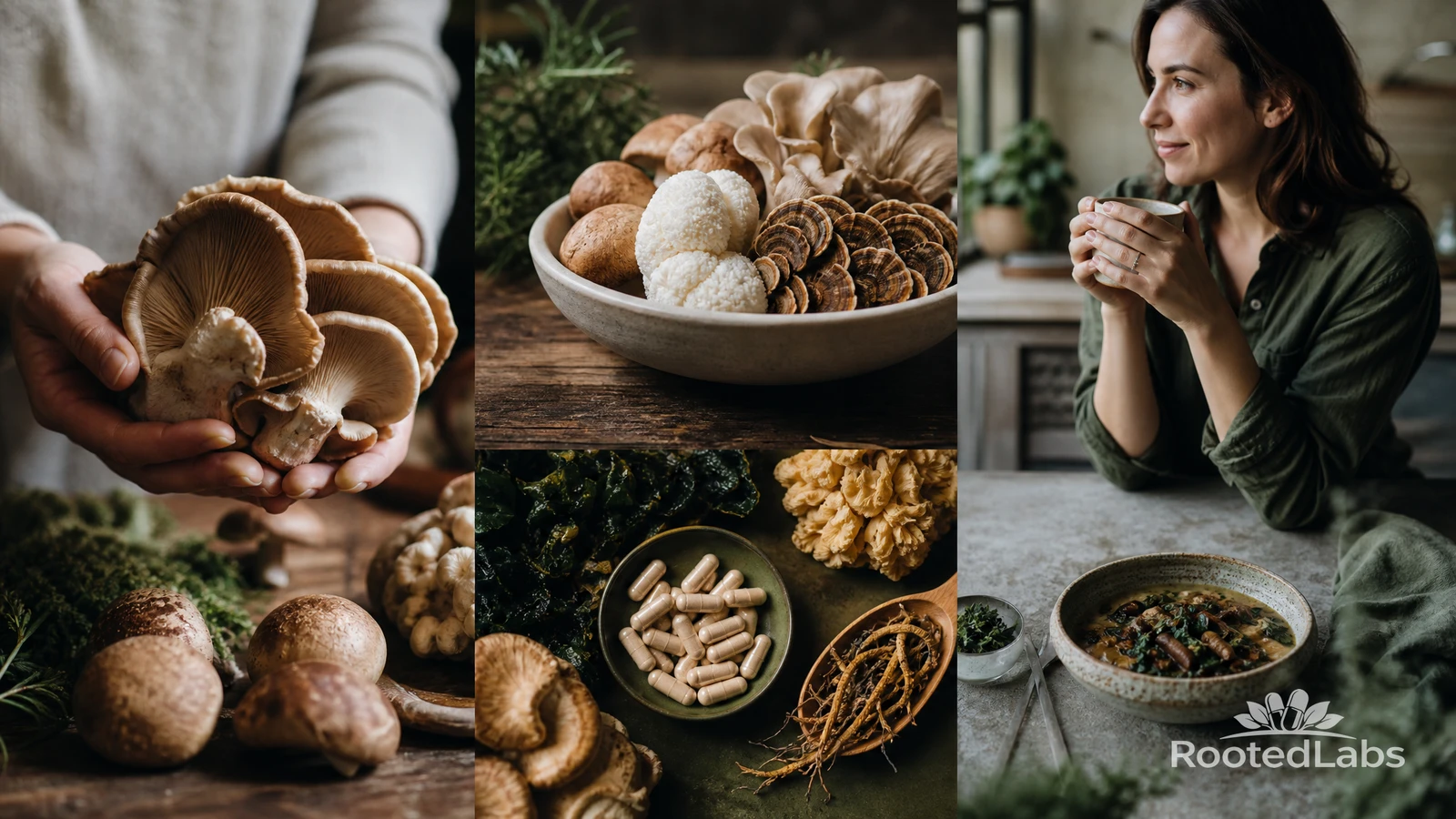
A mushroom supplement can look simple on the label, yet the details behind it matter. If you have asked, what are beta glucans, the useful answer is not just that they are beneficial compounds in mushrooms. It is also where they come from, how they are extracted, and whether the finished formula contains meaningful mushroom material instead of grain-based filler.
Beta glucans are naturally occurring polysaccharides, or complex carbohydrates, found in the cell walls of fungi, yeast, oats, barley, and certain algae. In functional mushrooms, they are among the compounds most closely associated with immune-system activity. They are not a stimulant and they are not a quick fix. Their value is better understood as part of a steady, well-made wellness routine.
What Are Beta Glucans in Mushrooms?
Not all beta glucans are identical. Their effects depend on their molecular structure, including how the glucose units are linked and how large or soluble the molecules are. Mushroom beta glucans commonly contain beta-1,3 and beta-1,6 linkages. Oat and barley beta glucans are structured differently, primarily with beta-1,3 and beta-1,4 linkages.
That distinction matters. Oat beta glucans are widely recognized for their role in soluble fiber intake and healthy cholesterol management when consumed as part of a balanced diet. Mushroom beta glucans are studied for how they interact with immune cells and receptors in the gut and throughout the body.
When consumed, mushroom beta glucans are not simply absorbed like a vitamin. Instead, they can interact with parts of the immune system, including cells that help recognize and respond to everyday challenges. Researchers continue to study exactly how different structures, doses, and mushroom species affect this process. The practical takeaway is measured: beta glucans may support normal immune function, but they are not a replacement for sleep, nutritious food, movement, or medical care.
Why Mushrooms Are a Meaningful Source
Medicinal mushrooms have been used in traditional wellness practices for generations. Today, extraction and testing give consumers a more precise way to evaluate what is in a capsule.
Maitake, also known as Grifola frondosa, is especially valued for its naturally occurring polysaccharides, including beta glucans. The mushroom has a dense, layered fruiting body and a long history of culinary and traditional use. For a daily supplement, however, eating mushrooms occasionally and taking a standardized extract are different experiences.
A concentrated extract is made by processing the mushroom to draw out and concentrate selected water-soluble compounds. This can provide a more consistent amount of polysaccharides per serving than an unstandardized mushroom powder. Consistency is the point. A routine only works when you can reasonably expect the next bottle to match the last one.
Fruiting body versus mycelium on grain
This is one of the most useful distinctions on a mushroom supplement label. The fruiting body is the recognizable mushroom itself. Mycelium is the threadlike root structure that mushrooms use to grow. Neither term is automatically good or bad, but they are not interchangeable.
Many lower-cost products use mycelium grown on grain. Depending on harvesting and processing, the finished material can retain a substantial amount of starch from rice, oats, or another growing medium. That may dilute the concentration of mushroom compounds in each serving.
A 100% fruiting-body formula avoids that particular concern. It focuses the ingredient on the mushroom portion consumers expect and makes it easier to assess the extract on its own merits. Clear labeling should tell you whether a product uses fruiting body, mycelium, grain, or a blend.
Beta Glucans, Polysaccharides, and What Labels Really Say
The terms beta glucans and polysaccharides are related, but they are not synonyms. Beta glucans are one type of polysaccharide. A label that lists total polysaccharides tells you something useful, but it does not automatically reveal the exact percentage of beta glucans.
This is where context matters. A standardized mushroom extract with a stated polysaccharide level may offer a more dependable benchmark than a label that simply says “mushroom blend” or “mushroom powder.” Still, responsible shoppers should avoid assuming that every polysaccharide listed is a beta glucan, especially when a manufacturer does not explain its testing or source material.
For example, a Maitake extract standardized to 50% polysaccharides gives you a concrete formulation standard. It does not mean 50% beta glucans unless the product specifically verifies beta glucan content through appropriate testing. Transparent brands make these distinctions clearly instead of using technical language as a substitute for substance.
What a quality label should make easy to find
A trustworthy supplement should not require detective work. Look for the mushroom species, the plant part used, the amount per serving, and whether the ingredient is an extract or plain powder. Standardization details, capsule materials, and other active ingredients should also be visible in Supplement Facts.
Manufacturing matters, too. Products made in quality-controlled US facilities provide an added level of accountability for many shoppers. Vegan HPMC capsules, straightforward excipients, and formulas without unnecessary artificial additives can make a daily routine easier to maintain.
At RootedLabs, the standard is direct: 500 mg of Maitake fruiting-body extract standardized to 50% polysaccharides, with no mycelium or grain filler. That type of specificity helps customers compare formulas based on what is actually in the bottle, not just the front-label language.
How to Think About Beta Glucans in a Daily Routine
Beta glucans work best as part of the basics, not as a substitute for them. A supplement may fit naturally with breakfast, coffee, or a glass of water after a workout. The goal is not a complicated protocol. It is a reliable habit that supports the broader choices you make every day.
There is no single ideal beta glucan dose for every person or every mushroom. The amount that makes sense depends on the mushroom species, extraction method, standardization, serving size, your diet, and your personal health context. A product with a larger milligram number is not automatically stronger if it relies on unstandardized powder or unclear source material.
It is also reasonable to consider the full formula. Turmeric and ginger are familiar botanical ingredients that complement a wellness-focused routine, while black pepper extract is commonly included alongside turmeric formulations. Magnesium citrate may support everyday nutritional intake for people whose diets fall short, though magnesium needs vary and higher amounts can cause digestive discomfort in some individuals.
Who Should Use Extra Care?
Mushroom supplements are not appropriate for everyone. If you are pregnant, nursing, managing a medical condition, have a mushroom allergy, or take prescription medications, speak with a qualified healthcare professional before adding a new supplement. This is particularly sensible for people using immune-modulating medication, blood-thinning medication, or medication that affects blood sugar.
Pay attention to how you feel after starting any supplement. More is not necessarily better, and stacking multiple mushroom blends can make it difficult to understand what is working for you. Start with the labeled serving, keep your routine consistent, and give your body time to respond.
Beta glucans are a practical example of why quality deserves as much attention as quantity. The source, structure, extraction, and transparency behind the capsule shape the value of what you take. Choose a formula you can understand, use it consistently, and let the routine remain simple enough to keep.