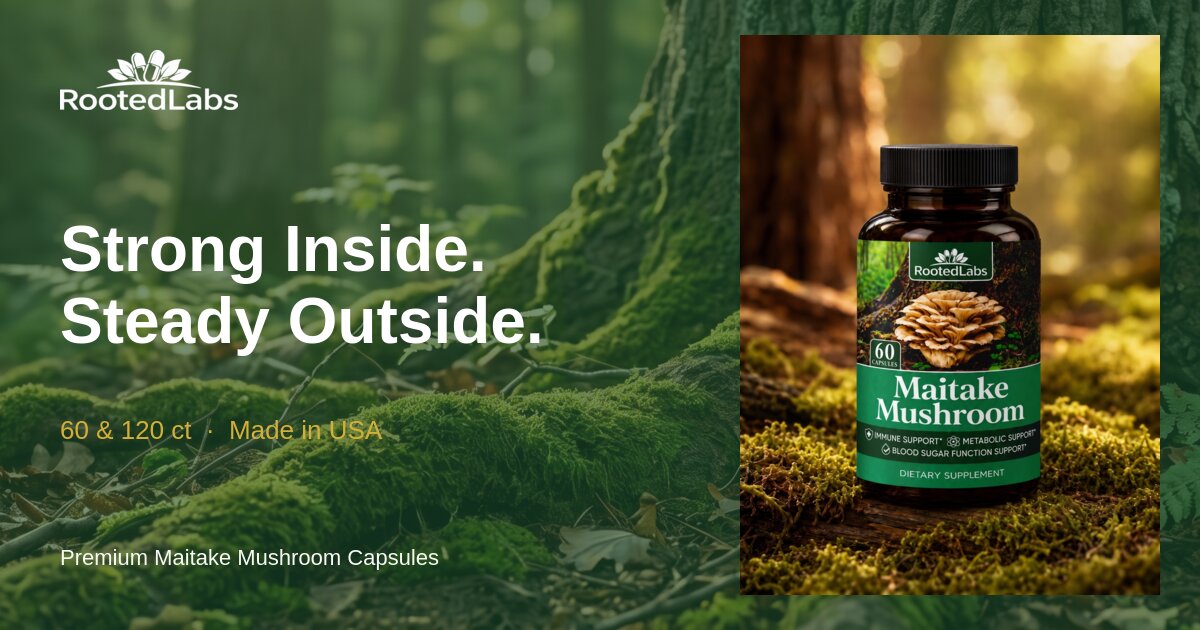
The mushroom behind the name
Maitake (Grifola frondosa) is a culinary and functional mushroom that grows in overlapping, fan-shaped clusters at the base of oak trees. In Japan its name means "dancing mushroom" — folklore says foragers danced when they found one, because it was that valuable.
Beyond the kitchen, maitake has a long history of traditional use and is one of the most studied functional mushrooms, largely because of its naturally occurring beta-glucans — complex polysaccharides found in the mushroom's cell walls that have been traditionally associated with supporting healthy immune function.*
Fruiting body vs. mycelium: why it matters
Not all mushroom supplements are made from the same part of the organism.
- Fruiting body — the actual mushroom that grows above ground. This is where beta-glucan concentrations are typically highest.
- Mycelium — the root-like network the mushroom grows from. Mycelium products are usually grown on grain, and much of the final powder can be the leftover grain substrate rather than mushroom.
When you see "100% fruiting body" on a label, it means the extract comes entirely from the mushroom itself — no grain filler counted in the weight.
What "standardized extract" means
Raw mushroom powder and mushroom extract are different things. Extraction breaks down the tough, indigestible cell walls (chitin) so the compounds inside are actually available to your body. A standardized extract goes a step further: it is tested to guarantee a minimum level of the compounds you're paying for — for example, 50% polysaccharides.
If a label doesn't state a standardization percentage, there's no way to know how much active content is in the capsule.
What to look for in a maitake supplement
- Fruiting-body extract, not mycelium-on-grain powder.
- Stated standardization (e.g., 50% polysaccharides) verified by testing.
- A meaningful dose — check the milligrams of extract per serving, not just "proprietary blend" totals.
- Clean capsules — vegan HPMC capsules if you avoid gelatin.
- Transparent sourcing and manufacturing — made in facilities following cGMP practices.
How maitake fits a daily routine
Consistency matters more than timing. Most people simply take maitake capsules with water alongside a meal, at whatever time of day they'll actually remember. Because capsules are tasteless, they avoid the bitter, earthy flavor that makes mushroom powders hard to stick with.
As with any supplement, talk to your healthcare professional before starting — especially if you are pregnant, nursing, managing a medical condition, or taking medications.
*These statements have not been evaluated by the Food and Drug Administration. This product is not intended to diagnose, treat, cure, or prevent any disease.