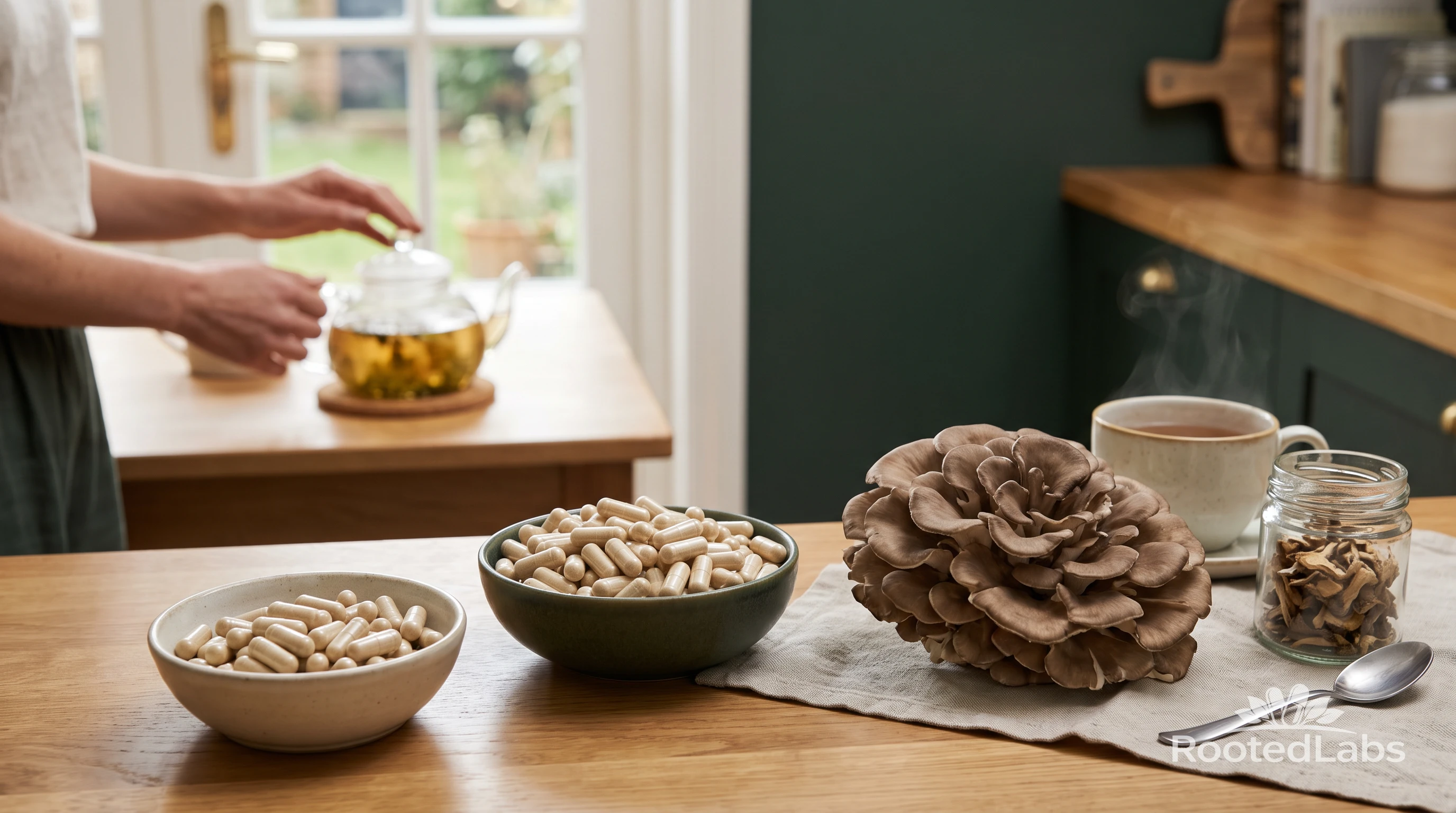
A supplement bottle should fit your routine, not create another decision every morning. When comparing 60 vs 120 maitake capsules, the meaningful difference is usually not potency. It is supply length, replenishment frequency, storage preferences, and how established your daily habit already is.
For a two-capsule daily serving, a 60-count bottle provides 30 days of use, while a 120-count bottle provides 60 days. Both can support the same straightforward ritual: take your capsules with breakfast, alongside coffee, or with the first full glass of water you drink each day. The better choice depends on where you are in that routine.
60 vs 120 Maitake Capsules at a Glance
The 60-count size is a one-month supply at two capsules per day. It is a practical place to start if you are new to maitake, trying a formula for the first time, or prefer to reassess your wellness staples monthly. It also works well for travel, a second home, or a medicine cabinet with limited space.
The 120-count size is a two-month supply at the same daily serving. It reduces the number of times you need to reorder and gives a consistent routine more room to become automatic. For many people, that is the real advantage. Daily wellness products tend to work best when they are easy to remember and easy to keep on hand.
Neither size makes the formula stronger. A larger bottle should mean more of the same formula, not a different standard of quality. Check the Supplement Facts panel to confirm the serving size, extract amount, and supporting ingredients rather than assuming a higher capsule count means a higher dose.
Start With the Formula, Not the Bottle
Bottle size matters after formula quality. Maitake supplements can look similar from the front label while differing substantially in what is inside the capsule.
Maitake is valued as a functional mushroom with a long history of culinary and traditional botanical use. In a daily supplement, the important questions are whether the product uses fruiting body, whether it is an extract rather than only ground mushroom powder, and whether its key compounds are standardized.
A standardized maitake extract gives you a defined benchmark for consistency from batch to batch. For example, a formula standardized to 50% polysaccharides provides a clear potency reference that plain powder alone may not provide. Polysaccharides are one of the naturally occurring compound groups shoppers often look for in functional mushroom products.
The source material also deserves a close look. Fruiting body is the visible mushroom structure. Some products rely heavily on mycelium grown on grain, which can leave a finished ingredient with more grain-based material than customers expect. A 100% fruiting-body formula with no mycelium or grain fillers offers a cleaner, more direct approach.
RootedLabs builds its maitake formula around 500 mg of standardized fruiting-body extract per serving, plus organic turmeric, organic ginger, black pepper extract, and magnesium citrate in vegan HPMC capsules. The supporting botanicals are not there to turn a daily supplement into a complicated protocol. They are included to keep the formula purposeful and convenient.
Choose 60 Capsules When You Are Establishing a Routine
A 60-count bottle is often the right first step. Thirty days gives you enough time to determine whether taking maitake capsules fits naturally into your day. The goal is not to chase a dramatic overnight change. It is to build a consistent practice that complements sleep, balanced meals, movement, and the rest of your wellness foundation.
This size is especially useful if you are still deciding when to take your capsules. Some people prefer them with breakfast because the meal serves as a reliable reminder. Others place the bottle beside their water bottle, coffee supplies, or daily vitamins. The best time is generally the time you will repeat.
A smaller bottle can also make sense if you have several supplements in rotation and want to avoid holding more product than you will use. If you travel frequently, a 30-day supply is easier to pack or replace. And if you are sensitive to changes in your supplement routine, starting with one month lets you introduce a new product thoughtfully.
Consistency still matters during that first month. Taking two capsules one day and forgetting them for several days does not tell you much about whether the product belongs in your routine. Keep the approach simple: follow the label directions, take the same serving consistently, and pay attention to how well the habit fits your day.
Choose 120 Capsules When Consistency Is Already Working
The 120-count option is designed for people who already know that maitake capsules have a place in their daily routine. At two capsules daily, it provides a 60-day supply and cuts replenishment decisions in half.
That may sound like a small operational detail, but it matters. A bottle that runs out before a reorder arrives can interrupt a habit that took weeks to establish. A two-month supply creates more breathing room, particularly for busy parents, professionals with unpredictable schedules, and anyone who prefers fewer errands and fewer recurring decisions.
The larger size can also be the better value when the cost per serving is lower. Do the math based on the price available when you shop: divide the bottle price by the number of daily servings, not simply the number of capsules. A 120-count bottle contains twice as many capsules as a 60-count bottle, but the value depends on the actual price difference.
There is one trade-off. A larger bottle is only a better purchase if you expect to use it consistently before its best-by date and can store it properly. Keep capsules sealed, dry, and away from excess heat and humidity. A cool cabinet is generally a better home than a steamy bathroom shelf or a sunny car console.
What Should Stay the Same Between Bottle Sizes
A responsible 60-count and 120-count option should have the same ingredient standards. The capsule count changes. The reason you chose the product should not.
Look for a label that clearly identifies the maitake amount per serving and specifies whether it is an extract. Confirm the standardization level when one is stated. Check that the formula identifies fruiting body rather than relying on broad mushroom language. If vegan compatibility matters to you, verify the capsule material instead of assuming every capsule is plant-based.
Quality control is another practical part of the decision. Manufacturing in the USA under quality-controlled conditions, transparent Supplement Facts, and a formula without artificial fillers all make it easier to understand what you are taking. These details are less flashy than oversized claims, but they are the details that support confidence in a product used day after day.
Be equally realistic about what a maitake supplement can do. It is not a substitute for medical care, prescribed medications, or core health habits. Functional mushroom and botanical supplements are intended to support general wellness, not diagnose, treat, cure, or prevent disease. If you are pregnant, nursing, managing a health condition, or taking medications, speak with a qualified healthcare professional before adding a new supplement.
A Simple Way to Decide
If you are choosing between the two sizes, ask one question: will a 60-day supply make your routine easier, or would a 30-day supply better match how you shop and use supplements right now?
Choose 60 capsules when you are trying the formula, traveling often, managing limited storage, or prefer monthly flexibility. Choose 120 capsules when you have already made maitake part of your daily rhythm, want fewer reorder points, and can store the bottle in a cool, dry place.
The strongest choice is not automatically the larger bottle. It is the bottle that helps you keep a clean, standardized maitake formula within reach long enough for consistency to become ordinary. Strong inside. Steady outside.