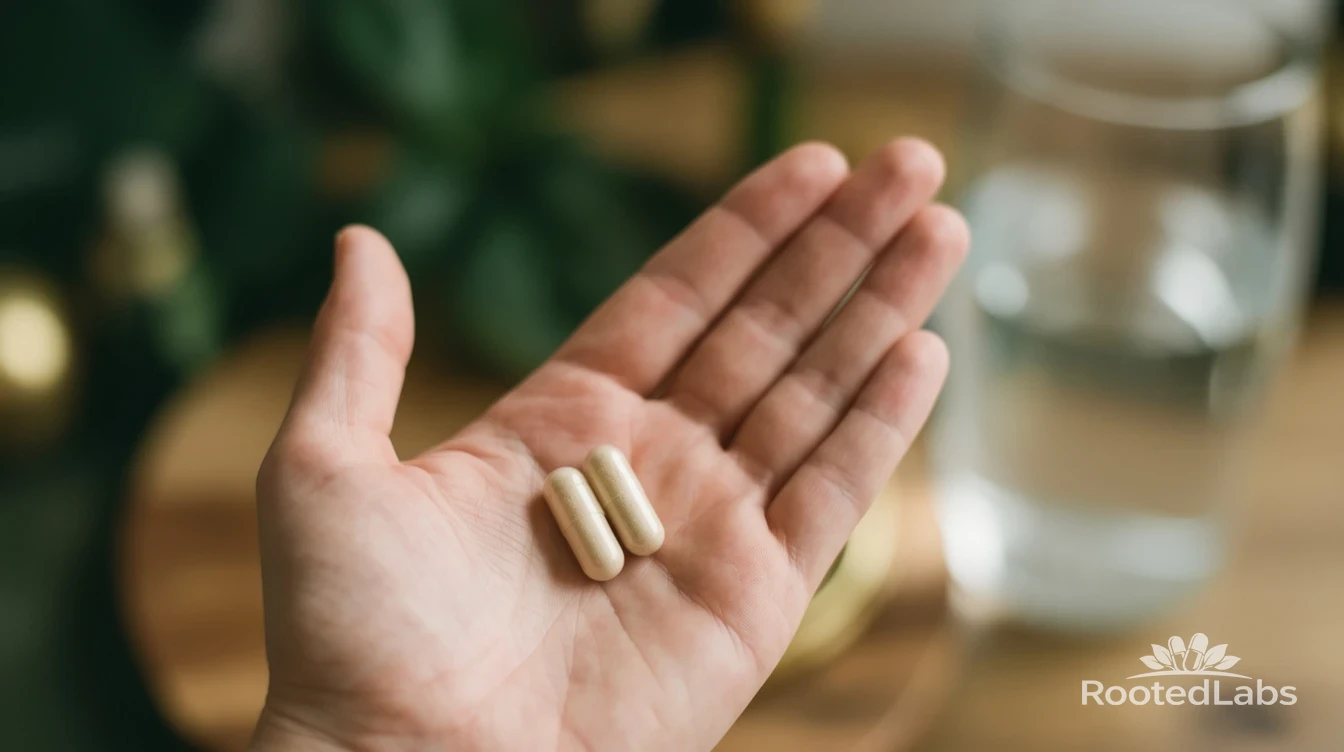
A mushroom supplement label can look convincing while telling you very little about what is actually inside the capsule. For shoppers seeking maitake capsules without mycelium, the key question is straightforward: are you getting a standardized extract made from the mushroom’s fruiting body, or a grain-grown ingredient with a less defined active profile?
That distinction affects transparency, consistency, and how confidently you can make a supplement part of your daily routine. Maitake has a long history of traditional use and is valued today for its naturally occurring beta-glucans and other polysaccharides. But not every maitake product is formulated to the same standard.
Why Mycelium-Free Maitake Matters
Mycelium is the threadlike root structure of a fungus. It is not inherently bad, and it has legitimate uses in food, materials, and research. The issue is how it is commonly produced for supplements.
Many mushroom products use mycelium grown on grain, such as rice or oats. After growth, the mycelium and its grain substrate may be harvested together, dried, and milled. The result can contain a meaningful amount of starch from the grain, rather than a concentrated amount of mushroom compounds. A label may say “mushroom” without making that difference clear.
A mycelium-free capsule takes a more direct approach. It uses the mature, visible part of the mushroom - the fruiting body - as the starting material. When that fruiting body is extracted and standardized, shoppers have a clearer basis for comparing potency from one bottle to the next.
This is not an argument that every mycelium ingredient is automatically poor quality. It is an argument for knowing what you are buying. If your goal is a clean maitake supplement with an identifiable mushroom source and a measurable standard, fruiting-body extract is usually the better fit.
What to Look for in Maitake Capsules Without Mycelium
The front label may make broad promises. The Supplement Facts panel and ingredient list are where the useful details live. Look beyond phrases like “mushroom complex,” “full spectrum,” or “proprietary blend.” Those terms do not tell you whether the formula contains fruiting bodies, grain-grown mycelium, or how much active material is present.
1. A Clear Fruiting-Body Statement
Look for wording such as “100% fruiting body” or “fruiting-body extract.” The manufacturer should state this plainly, not leave you to infer it from mushroom imagery or marketing copy.
The ingredient list also matters. If you see rice, oats, millet, or other grain ingredients associated with the mushroom material, ask whether the formula uses grain-grown mycelium. A capsule can be vegan and still contain grain-based filler, so those are separate considerations.
2. Extract, Not Just Powder
Whole mushroom powder has a place, especially for culinary use. But an extract is generally the more practical format when a daily capsule is intended to deliver a concentrated, consistent amount of selected mushroom compounds.
Extraction uses water, alcohol, or a combination of methods to pull desirable constituents from the fruiting body. A quality label should identify the extract amount in milligrams. It should not hide the amount inside a blend that combines several mushrooms and botanicals under one total number.
3. Polysaccharide Standardization
Maitake naturally contains polysaccharides, including beta-glucans. Standardization is a quality-control tool: it sets a target level for a specified class of compounds, helping reduce batch-to-batch variation.
A stated polysaccharide percentage is more informative than a vague claim of “high potency.” Still, read it with context. “Polysaccharides” can be a broad measurement, and a high percentage alone does not establish every aspect of quality. Pair it with a clearly identified fruiting-body source, an extract amount, and transparent manufacturing information.
For a daily wellness formula, 500 mg of standardized maitake fruiting-body extract offers a simple, meaningful reference point. RootedLabs uses that amount with a 50% polysaccharide standard, providing a clear specification instead of asking customers to rely on marketing language.
4. A Formula That Explains Every Ingredient
A clean label is not necessarily a short label. It is a label where every ingredient has a stated purpose.
Some people prefer maitake alone. Others want a thoughtfully paired formula that supports an established wellness routine. Organic turmeric and organic ginger are familiar botanical companions, while black pepper extract is commonly included alongside turmeric. Magnesium citrate may also suit a broader daily wellness formula. What matters is that these additions are disclosed by amount and do not distract from an underdosed mushroom ingredient.
Avoid formulas that use a long list of extracts without telling you how much of each one you receive. More ingredients do not automatically mean more value.
Fruiting Body vs. Mycelium: The Practical Comparison
Fruiting-body extract and grain-grown mycelium are not interchangeable labels. They begin with different raw materials and often lead to different questions at the point of purchase.
A fruiting-body extract makes it easier to assess the mushroom source, extraction method, dose, and standardization. Grain-grown mycelium products may require more scrutiny because the grain substrate can remain in the finished material. If the company does not explain the percentage of mushroom material versus starch, there is no easy way to judge what the capsule delivers.
There is also a difference between “no mycelium” and “no fillers.” A product can exclude mycelium yet still rely on unnecessary flow agents, artificial colors, or opaque blends. The strongest standard is broader: 100% fruiting body, no grain-grown mycelium, no unnecessary filler, and a Supplement Facts panel that is easy to read.
How to Build Maitake Into a Consistent Routine
Maitake is best approached as a daily wellness habit, not a quick fix. Functional mushroom supplements are not designed to diagnose, treat, cure, or prevent disease. Their value is in supporting a foundation that already includes food quality, movement, sleep, hydration, and appropriate medical care.
Consistency is usually more useful than constantly changing products or taking an oversized serving for a few days. Choose a capsule you can take comfortably and repeatably. Many people take maitake with breakfast, coffee, or their first glass of water, especially when the formula includes complementary botanicals.
A simple routine works well:
- Take the labeled serving at the same time each day.
- Keep the bottle where the habit already happens, such as beside your coffee or breakfast items.
- Give your routine time before deciding whether the product belongs in it.
- Reorder based on your actual use, not on a burst of motivation.
A 60-count bottle can fit a 30-day routine when the serving is two capsules daily. A 120-count option can support 60 days with fewer interruptions. The right size depends on whether you are trying maitake for the first time or already know it fits your daily rhythm.
Questions to Ask Before You Buy
Does “mushroom extract” always mean fruiting body?
No. “Mushroom extract” does not automatically identify the part of the fungus used. Look specifically for a fruiting-body statement and ask for clarification when the source is not disclosed.
Are all polysaccharide claims equal?
No. A polysaccharide percentage is useful only when it is connected to a transparent mushroom source and extract amount. It should be one part of your evaluation, not the only number you consider.
Is a single-ingredient capsule better than a blend?
It depends on your preference. A single-ingredient formula makes it easier to isolate maitake. A blend can be a practical choice when the supporting ingredients are relevant, properly dosed, and fully disclosed. Neither format should use a blend to hide low amounts of maitake or unclear sourcing.
Who should check with a health professional first?
People who are pregnant or nursing, managing a medical condition, preparing for surgery, or taking prescription medications should speak with a qualified health professional before adding a supplement. This is especially sensible for anyone using medications that affect blood sugar, blood pressure, or immune function.
The best maitake capsule is not the one with the loudest label. It is the one that makes its source, extract standard, ingredient amounts, and daily use easy to understand. Choose the formula you can verify, then give that routine the consistency it deserves.