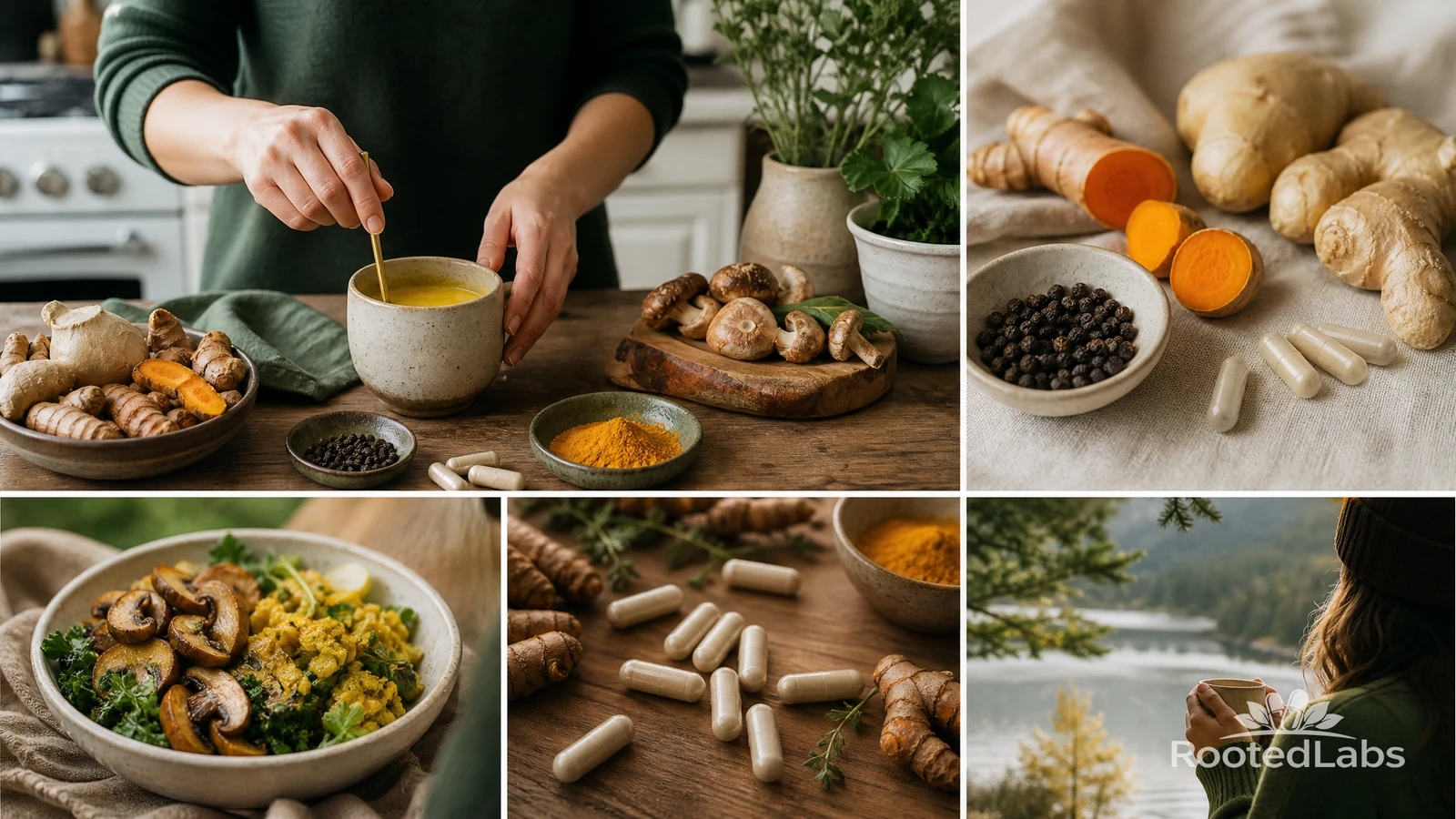
A warm turmeric-ginger drink can be a useful ritual, but the real question is whether it is practical enough to repeat. Knowing how to combine turmeric ginger comes down to more than putting two well-known roots in the same cup. Preparation, absorption, ingredient quality, and your own routine all shape whether the combination makes sense for daily use.
Turmeric and ginger have long appeared together in cooking and traditional wellness practices because their flavors work well as a pair: turmeric is earthy and slightly bitter, while ginger brings heat and brightness. A thoughtful modern routine keeps that simplicity while paying closer attention to consistency and formulation.
How to Combine Turmeric Ginger for Everyday Use
The simplest approach is to take turmeric and ginger with a meal that contains some fat. Both ingredients can be used in food, steeped in a beverage, or taken in a capsule. The best choice depends on what you will actually maintain, not on which format feels most impressive for a week.
Fresh ingredients offer flavor and flexibility. Supplements offer measured amounts and less preparation. Neither is automatically better. If you enjoy cooking and regularly make soups, curries, eggs, or smoothies, fresh turmeric and ginger may fit naturally. If your mornings are already full, a well-made capsule can remove the friction that often ends a good intention.
Start with food if you enjoy the ritual
For a food-first option, grate fresh ginger into tea, oatmeal, broth, or a smoothie. Add turmeric powder or freshly grated turmeric root, then include a small amount of fat such as yogurt, nut butter, coconut milk, olive oil, or avocado. A pinch of black pepper is a traditional pairing and has a practical purpose: piperine, a compound in black pepper, may support curcumin absorption.
The amounts do not need to be elaborate. Start with a small amount of each spice and adjust for flavor and tolerance. Turmeric can taste chalky when overused, and fresh ginger can be sharp. A recipe you look forward to is more likely to become a routine than a heavily spiced drink you force down.
Use capsules when consistency matters most
Capsules are often the more practical option for people who travel, work early, manage school drop-offs, or simply do not want another recipe to prepare. Look beyond the front label. Turmeric powder, turmeric extract, ginger powder, ginger extract, and black pepper extract are not interchangeable ingredients.
A transparent Supplement Facts panel should identify what form is used and how much is included. Standardized extracts can provide more consistency than an unspecified raw powder, while black pepper extract should be used thoughtfully because piperine can affect the absorption of certain medications. Clean capsules also make it easier to avoid added sugars, artificial flavors, or unnecessary blend ingredients that can show up in drink mixes.
Why Black Pepper and Food Matter
Turmeric contains curcuminoids, including curcumin, which are widely studied plant compounds. Curcumin on its own is not easily absorbed. Pairing turmeric with dietary fat and black pepper is a common formulation strategy intended to improve bioavailability.
That does not mean more black pepper is always better. Piperine is active, and it may change how the body processes some prescription medicines. If you take medication, particularly medication with specific timing or blood-thinning effects, ask a pharmacist or clinician before adding a turmeric formula with black pepper extract. The same careful approach applies to concentrated ginger supplements.
Food can also make the combination easier on the stomach. Some people do well taking turmeric and ginger before breakfast; others notice nausea, heartburn, or digestive discomfort when they take concentrated botanicals on an empty stomach. Taking them with lunch or breakfast is often a sensible place to begin.
Build a Routine You Can Keep
There is no single best time to take turmeric and ginger. A useful routine is one tied to a habit that already exists. Breakfast, your first glass of water, or lunch are usually more reliable anchors than a vague promise to take supplements “later.”
A straightforward daily approach can look like this:
- Choose one format. Use a turmeric-ginger meal or drink when you want the culinary experience, or choose a capsule when predictable intake and convenience are the priority.
- Take it with food. Include a meal or snack, especially if you are using turmeric in a concentrated supplement form.
- Repeat before adjusting. Give your routine time. Avoid stacking multiple new supplements at once, since it becomes harder to identify what agrees with you.
Consistency should not be confused with excess. Taking several turmeric products, ginger shots, and high-potency blends at the same time can increase the chance of digestive discomfort without making a routine more disciplined. One clearly labeled formula or one intentional food habit is often enough.
Choosing a Turmeric-Ginger Formula With Intention
If you prefer a supplement, compare formulas on the details that affect quality and usability. Start with ingredient identity and amount. A label should tell you whether it contains turmeric root powder or extract, ginger root powder or extract, and the source of any black pepper ingredient. Proprietary blends that hide individual amounts make it harder to decide whether the formula fits your needs.
Then consider what else is in the capsule. For routine-driven adults, a formula that combines complementary ingredients can be simpler than managing several separate bottles. RootedLabs, for example, pairs organic turmeric, organic ginger, black pepper extract, and magnesium citrate with a 500 mg standardized Maitake fruiting-body extract. The point is not to create a complicated protocol. It is to place clearly identified ingredients in a format that is easy to take consistently.
Quality standards matter beyond the botanical list. Look for a manufacturer that is clear about capsule materials, testing practices, and where the product is made. For mushroom-containing formulas, it is also worth checking whether the product uses fruiting body or grain-based mycelium, and whether an extract is standardized. Clear specifications are more useful than broad claims about being “supercharged” or “advanced.”
Fresh Roots, Powders, and Extracts Are Different Tools
Fresh turmeric and ginger are excellent culinary ingredients, particularly when flavor, hydration, and meal preparation are part of the benefit you want. They are also naturally variable. Root size, growing conditions, freshness, and preparation can all change what ends up in your cup or meal.
Powders are convenient for cooking but can be messy and difficult to measure precisely. Extracts are designed for more concentrated, consistent compounds, though the meaningful question is always what the label actually specifies. An extract is not automatically superior in every context, but it can be a better fit when you value predictable daily intake over kitchen preparation.
This is the trade-off worth keeping in view: food brings flexibility and enjoyment; a transparent supplement brings convenience and repeatability. Many people use both, taking a capsule as their baseline habit while still cooking with ginger and turmeric because they enjoy the taste.
When to Slow Down or Ask a Clinician
Turmeric and ginger are familiar foods, but concentrated supplements are not right for everyone. Speak with a qualified healthcare professional before using a new botanical supplement if you are pregnant or nursing, preparing for surgery, have gallbladder concerns, manage a bleeding disorder, or take prescription medication. This is especially relevant for products that include black pepper extract.
Pay attention to your own response as well. Heartburn, stomach upset, or other unwanted effects are signals to reduce, pause, or reassess rather than push through. Wellness routines should support daily life, not create another problem to manage.
The most useful way to combine turmeric and ginger is the one that stays clear, measured, and easy to repeat. Put it beside a meal, choose ingredients you can identify, and let the strength of the habit do the work over time.