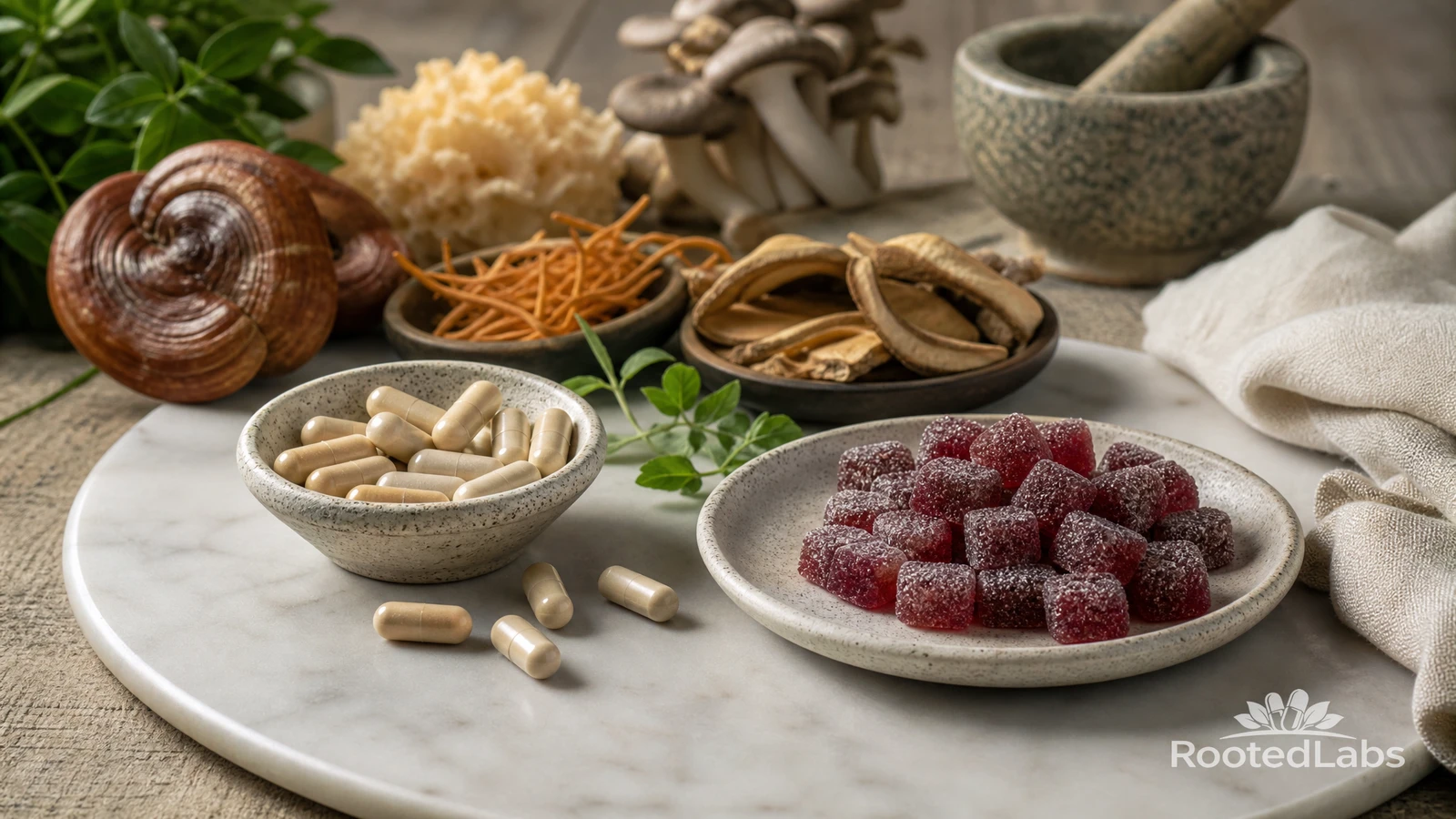
A functional mushroom supplement should fit your routine without making you guess what is actually in it. When comparing mushroom capsules versus gummies, the real difference is rarely just taste. It is the amount and form of mushroom material, the supporting ingredients, and whether the product makes consistent daily use easy.
Gummies can make a supplement feel like a treat. Capsules are usually the more direct delivery format. Neither format is automatically good or bad, but they are built around different priorities. If you are choosing a mushroom supplement for a long-term wellness routine, the label deserves more attention than the flavor.
Mushroom Capsules Versus Gummies at a Glance
Mushroom gummies are designed for convenience and appeal. They are often easier for people who dislike swallowing capsules, and their familiar texture can reduce friction at the start of a new habit. The trade-off is that gummies need a structure: sweeteners, gelling agents, flavoring, acids, and often color. Those ingredients take up space that could otherwise go toward an extract or other functional ingredients.
Capsules are designed for formulation efficiency. A capsule can hold a measured dose of powdered mushroom extract and compatible botanicals with relatively few added ingredients. This makes it easier to assess what you are getting per serving and compare one product with another.
For many routine-driven adults, that clarity matters more than a fruit-flavored format. A capsule beside breakfast, coffee, or a glass of water becomes a small, repeatable step. The best choice is the one you will use consistently, but consistency works better when the formula itself is worth repeating.
Potency Starts With the Form of Mushroom
The word “mushroom” on a front label does not tell you enough. A product may contain fruiting body, mycelium, whole mushroom powder, extract, or a blend of several materials. These are not interchangeable.
The fruiting body is the recognizable above-ground mushroom structure. It has a long history of traditional use and is commonly used in concentrated extracts. Mycelium is the root-like network that grows through a substrate. When mycelium is grown on grain and harvested without fully separating the grain, the finished material can contain a meaningful amount of starch from that substrate. That is why a label that simply says “mycelium” or “mushroom complex” can leave important questions unanswered.
An extract is also different from plain mushroom powder. Extraction is used to concentrate selected mushroom compounds into a smaller serving. For shoppers comparing products, a stated extract ratio or standardized compound level can provide useful context, provided the brand clearly identifies the source material and serving size.
For example, a formula standardized to a defined polysaccharide level gives you a clearer potency reference than a proprietary blend with no breakdown. Polysaccharides are only one part of a mushroom’s chemical profile, so they should not be treated as the sole measure of quality. Still, transparent standardization is a practical sign that a brand has specified what its extract is intended to deliver.
A gummy can contain a quality extract. A capsule can contain low-grade powder. The format does not determine potency by itself. But capsules generally make it easier to provide a substantial, clearly labeled extract serving without building the rest of the formula around taste and texture.
Look Beyond Front-Label Milligrams
A large milligram number can be persuasive, but it is incomplete on its own. Ask whether that number refers to whole powder or extract, whether the mushroom source is named, and whether the amount is listed per serving. Also check how many gummies equal one serving. A bottle that appears to offer 60 gummies may provide only 30 daily servings if the suggested use is two gummies.
A transparent Supplement Facts panel should make the answers easy to find. You should not need to infer the dose from marketing language or search through fine print to learn whether a formula uses fruiting body, grain-grown mycelium, or an unspecified blend.
Sugar and Added Ingredients Are a Real Trade-Off
Most gummies require sweeteners and a gelling system to deliver a stable, pleasant product. Depending on the formula, that may mean sugar, glucose syrup, tapioca syrup, sugar alcohols, pectin, gelatin, natural flavors, citric acid, and colors. Some of these ingredients are perfectly acceptable to many people. The question is whether they align with your preferences and your daily routine.
One or two gummies may not add much sugar in isolation. Yet supplements are meant to be taken regularly. If you are already intentional about added sugar, artificial colors, allergens, or vegan compatibility, a gummy label can become more complicated than expected.
Capsules are not automatically ingredient-free. They may contain flow agents, fillers, or animal-derived gelatin shells. A clean capsule formula should identify the capsule material and keep inactive ingredients limited and purposeful. Vegan HPMC capsules are a common plant-based option for people who prefer to avoid gelatin.
The contrast is simple: gummies are optimized for taste; capsules can be optimized for the active formula. There is room for both, but they serve different priorities.
Daily Practicality Matters More Than Novelty
A supplement does not support a routine if it stays in the cabinet. Gummies may have an advantage for adults who strongly dislike capsules or need a more approachable first step. They can also be useful while traveling, provided they do not melt or stick in heat.
Capsules tend to be simpler for daily use. They are compact, portioned, and less likely to create questions about calories, sugar, or flavor fatigue. Their neutral taste also works well with a morning routine. Take them with water and a meal if that feels best for your stomach, then move on with your day.
There is another practical point: gummies can look and taste like candy. Keep them stored safely and out of reach of children. This is sensible with all supplements, but especially relevant for flavored formats.
What to Check Before You Choose
Whether you buy capsules or gummies, use the same disciplined standard. Start with the mushroom species. Maitake, lion’s mane, reishi, cordyceps, and turkey tail each have distinct traditional histories and are often selected for different wellness goals. A product should tell you exactly which mushroom or mushrooms it contains.
Next, check the mushroom material. Look for a direct statement about fruiting body, extract, mycelium, or whole powder. If the label uses a proprietary blend, confirm whether it still provides individual ingredient amounts. Then review the serving size, standardization details, and inactive ingredients.
Manufacturing and testing practices matter as well. Supplements are not pre-approved by the FDA before sale, so responsible brands should provide clear labeling and maintain quality controls. US manufacturing can be a useful consideration, particularly when paired with transparent specifications and lot-based quality practices. It is not a substitute for a good formula, but it is part of the full quality picture.
Finally, avoid buying based on a broad promise. Functional mushrooms are supplements, not quick fixes. They are best considered one part of a foundation that also includes food, movement, sleep, hydration, and appropriate medical care.
When Capsules Are Usually the Better Fit
Capsules are often the practical choice when you want a higher-focus formula, minimal added ingredients, and clear dose information. They are especially well suited to people who already take supplements with breakfast or have a dependable morning routine.
RootedLabs, for instance, uses a 500 mg standardized Maitake fruiting-body extract in a vegan capsule formula, alongside organic turmeric, organic ginger, black pepper extract, and magnesium citrate. The formula is standardized to 50% polysaccharides and contains no mycelium or grain fillers. That approach reflects a capsule format’s core advantage: more room for disclosed active ingredients and less need for taste-driven extras.
Gummies may be the better fit if swallowing capsules is a genuine barrier. Just choose them with the same care. A pleasant format should not require you to accept unclear sourcing, a token mushroom dose, or a long list of ingredients you did not intend to take every day.
The most useful supplement is not the one with the loudest package or sweetest flavor. It is the one with a formula you can understand, a dose you can verify, and a place in your routine you can keep.