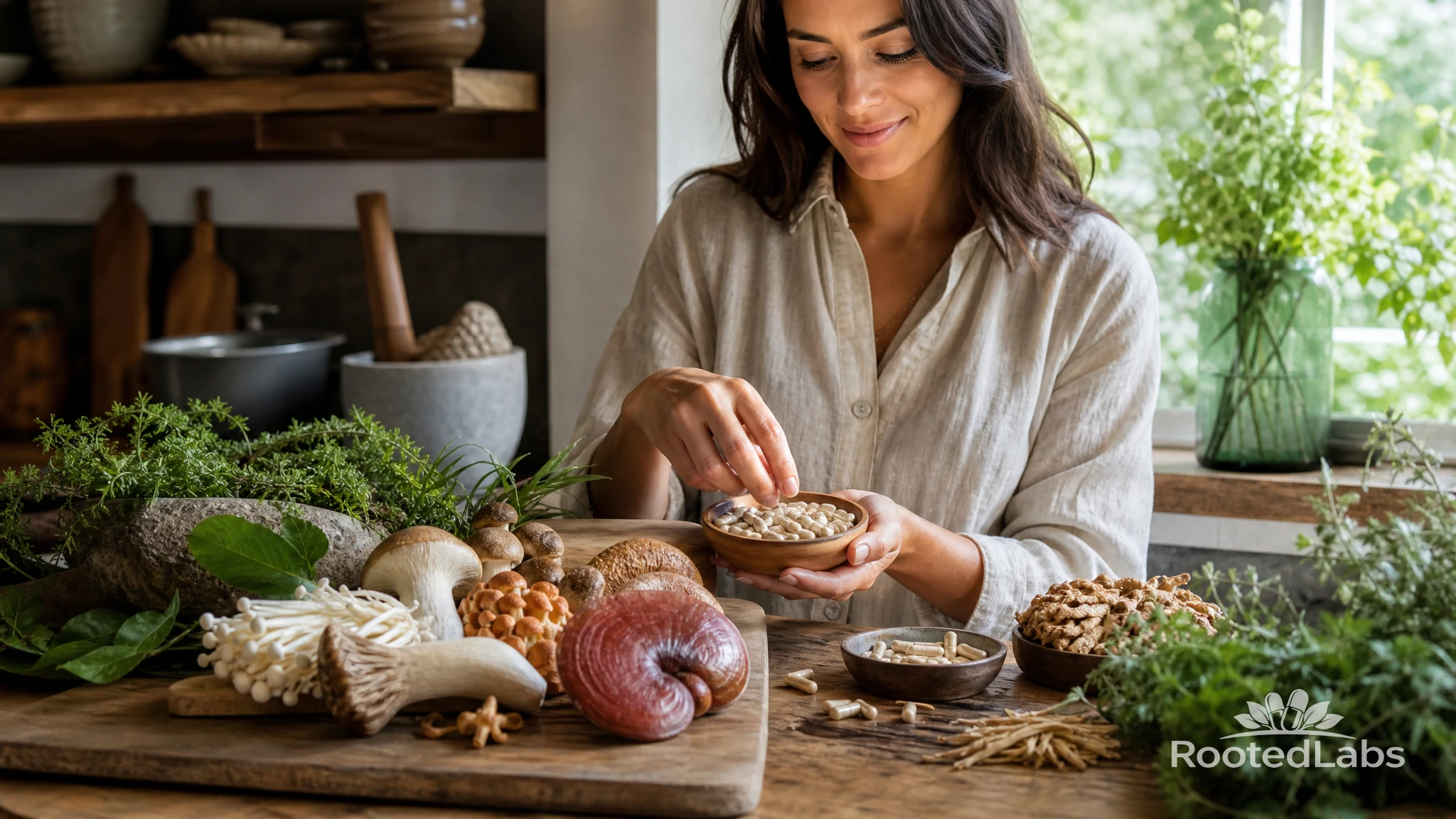
Most mushroom supplements look similar from the front of the bottle. The difference is usually on the Supplement Facts panel: whether the formula uses a meaningful extract, which part of the mushroom is included, and whether the stated potency gives you a clear reason to take it daily. A well-made antioxidant mushroom supplement should make those answers easy to find.
For people building a steady wellness routine, the goal is not to chase a dramatic feeling after one capsule. It is to choose a clean, consistent formula that fits alongside breakfast, coffee, hydration, training, or a busy workday. That starts with knowing what the label is actually telling you.
What an antioxidant mushroom supplement is designed to support
Antioxidants are compounds that help the body manage oxidative stress, a normal process connected to metabolism, physical activity, environmental exposure, and everyday life. Your body has its own antioxidant defenses, and foods such as fruits, vegetables, herbs, spices, and functional mushrooms can contribute beneficial compounds to a balanced routine.
Maitake, also known as Grifola frondosa, has a long history of culinary and traditional use. Today, it is valued in supplements for naturally occurring beta-glucans and other polysaccharides, along with its broader role in daily immune and wellness support. A mushroom capsule is not a substitute for sleep, nutrient-dense meals, movement, or medical care. It is a practical way to make a quality mushroom extract part of an already thoughtful routine.
The word “antioxidant” deserves context. It should not be used as a promise to prevent disease, reverse aging, or replace treatment for a health condition. Responsible supplement language focuses on support: a formula can complement the body's normal antioxidant defenses and overall wellness habits without making drug-like claims.
Why fruiting body and extract standards matter
Not all mushroom ingredients are equivalent. The fruiting body is the recognizable mushroom structure that grows above the substrate. Mycelium is the root-like network that mushrooms use to grow. Both can be studied and used in different contexts, but shoppers should be able to see exactly what is in the capsule.
Many lower-cost products use mycelium grown on grain. Depending on processing, the finished ingredient may include a substantial amount of grain-based material. That does not automatically make a product unusable, but it can make potency and mushroom content harder to evaluate. If you want a formula centered on the mushroom itself, look for a label that clearly identifies 100% fruiting body and does not hide filler behind broad proprietary language.
Extraction matters, too. Whole mushroom powder can have a place in food and traditional preparations, but a standardized extract is designed to provide a more consistent concentration of selected compounds from batch to batch. For a routine-based supplement, consistency is a meaningful advantage. You should not have to guess whether this bottle is comparable to the last one.
Polysaccharide standardization is one useful marker. It tells you that the manufacturer has set a target for a key class of mushroom compounds rather than relying only on the total weight of raw powder. Still, numbers need context. A large milligram amount of an unspecified powder is not necessarily more useful than a smaller amount of a clearly standardized extract.
Read the label in this order
When comparing an antioxidant mushroom supplement, begin with four practical details:
- The mushroom source: Look for fruiting body if that is your preference, and avoid vague descriptions when the source is unclear.
- The extract quality: A named standardization, such as polysaccharide content, is more informative than a generic “mushroom blend.”
- The full dose: Check the milligrams per serving and the serving size, not just the largest number printed on the front label.
- The supporting ingredients: Know whether botanical ingredients, capsule materials, and flow agents are disclosed clearly.
This approach helps cut through front-label claims. “Mushroom complex,” “superfood,” and “immune blend” may sound appealing, but they do not tell you the form, concentration, or meaningful amount of each ingredient.
A formula should earn its extra ingredients
Some Maitake formulas include complementary botanicals. Turmeric and ginger are familiar culinary ingredients with long-standing traditional use, and black pepper extract is often included because piperine may support the absorption of certain turmeric compounds. Magnesium citrate may also fit naturally in a daily wellness formula, depending on the amount provided and your total magnesium intake from food and other supplements.
The trade-off is straightforward: a multi-ingredient formula can be convenient, but every added ingredient should have a stated purpose and a visible dose. If a supplement lists several botanicals without amounts, you cannot assess what you are taking. If you prefer a single-ingredient mushroom product, that is a reasonable choice as well. The best format depends on what already exists in your routine.
A transparent formula also considers dietary fit. Vegan HPMC capsules are a practical option for people avoiding gelatin. Artificial colors, unnecessary binders, and undisclosed blends do not improve a daily mushroom habit. Clean-label design is not about making a bottle sound complicated. It is about keeping the formulation focused enough that you can understand it.
How to build a daily Maitake routine
Consistency matters more than perfection. Choose a time you already repeat - breakfast, your first cup of coffee, or lunch - and take your capsules according to the label directions. Pairing a supplement with an established habit reduces the friction that causes bottles to sit unopened in a cabinet.
Give a new routine time. Supplements are generally better evaluated over weeks of consistent use than from a single day. Keep the rest of your wellness foundation steady: eat a varied diet, stay hydrated, manage stress where you can, and prioritize sleep. That context is more useful than expecting one ingredient to carry the full workload.
If you are pregnant or nursing, have a medical condition, take medication, or are preparing for surgery, speak with a qualified healthcare professional before adding a mushroom or botanical supplement. This is especially relevant for ingredients that may not suit every medication plan or health history.
What quality control should look like
A trustworthy supplement brand does not ask you to take quality on faith. It provides a complete Supplement Facts panel, identifies ingredient forms, and avoids inflated language that the formula cannot support. US manufacturing can add reassurance when it is paired with documented quality controls and clear labeling, rather than used as a standalone marketing claim.
For example, RootedLabs formulates its Maitake capsules with 500 mg of standardized fruiting-body extract at 50% polysaccharides, plus organic turmeric, organic ginger, black pepper extract, and magnesium citrate. The formula uses vegan capsules and is made in the USA, with no mycelium or grain filler. Those specifics matter because they allow a shopper to compare the formula on substance, not slogans.
Bottle size matters, too. A 60-count bottle can support a 30-day routine when the serving is two capsules, while a 120-count bottle can make a 60-day replenishment cycle easier. Neither is inherently better. The right choice is the one that matches your daily serving and helps you avoid an unplanned gap in a habit you intend to keep.
Choose clarity over exaggerated promises
The strongest antioxidant mushroom supplement is not necessarily the one with the most dramatic claims. It is the one that clearly states its mushroom source, extract standardization, dose, supporting ingredients, and manufacturing approach. Those details give you a sound basis for deciding whether it belongs in your routine.
A good capsule should feel uncomplicated: strong inside, steady outside. When the label is transparent and the habit is realistic, daily wellness support becomes one less thing to overthink.