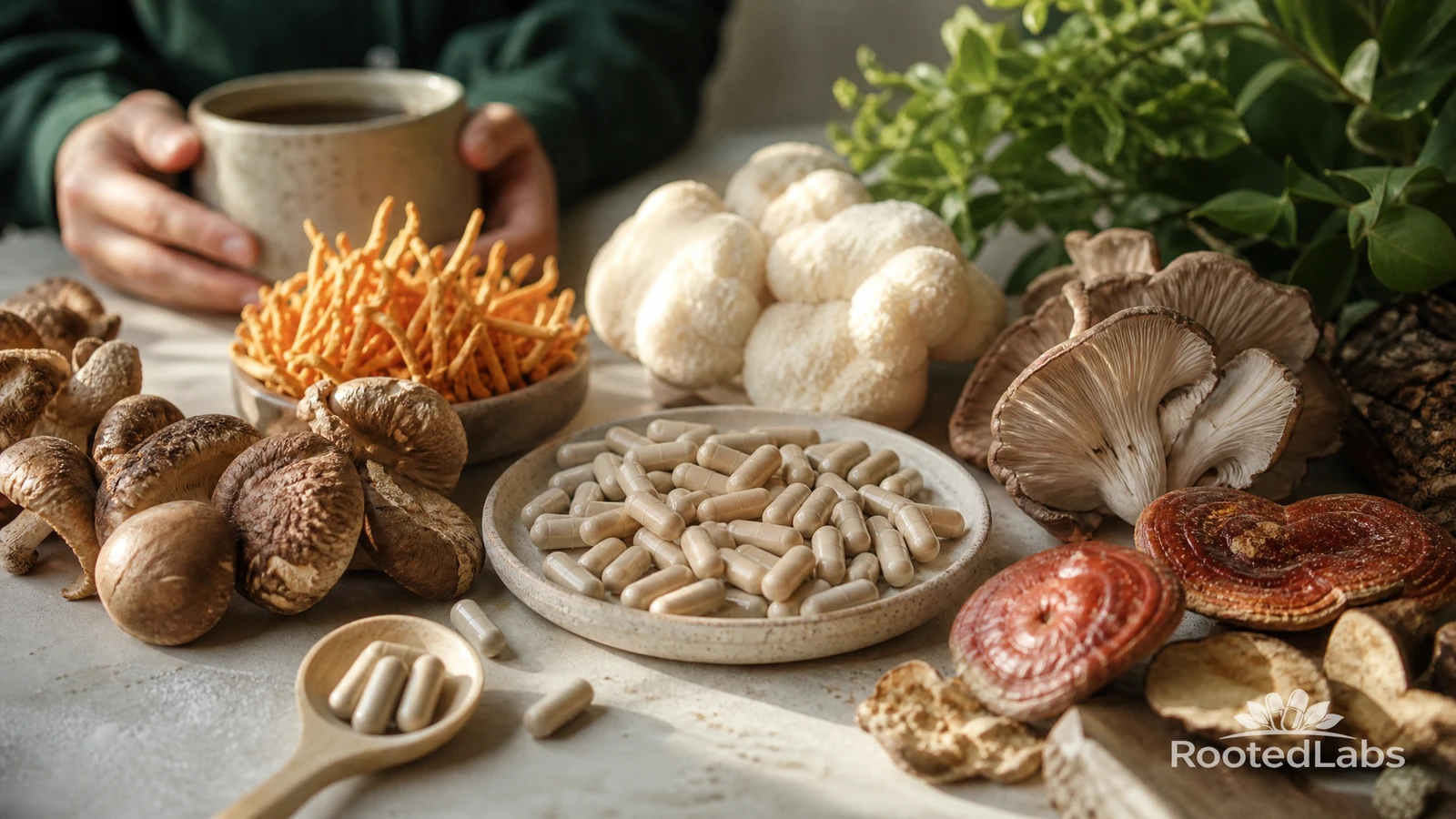
A mushroom supplement label can look convincing in five seconds, then become surprisingly vague when you read the details. “Mushroom blend,” “full spectrum,” and a large number on the front panel do not tell you what part of the mushroom is used, how concentrated it is, or whether the capsule supports a routine you can actually keep. Thoughtful mushroom capsule selection starts with the facts behind the front label.
For daily wellness support, the strongest choice is usually not the most complicated formula. It is the one that clearly identifies the mushroom material, provides a meaningful standardized extract, avoids unnecessary filler, and fits naturally into your morning or evening routine.
Start With the Mushroom Material
The first question is simple: are you getting mushroom fruiting bodies, mycelium, or an undisclosed combination? These materials are not interchangeable.
The fruiting body is the recognizable above-ground part of the mushroom. It has a long history of traditional use and is commonly selected for concentrated extracts because it contains naturally occurring mushroom compounds, including beta-glucans and other polysaccharides. A label that states “100% fruiting body” gives you a clear starting point.
Mycelium is the root-like network that grows beneath the mushroom. It can be a legitimate ingredient, but many mycelium products are grown on grain. When that material is harvested without being fully separated from its growing medium, the finished powder may contain a meaningful amount of grain starch alongside fungal biomass. That does not automatically make a product poor quality, but it does make transparency essential.
Look for a label that plainly states what is in the capsule. If the product only says “mushroom powder” or uses a proprietary blend without identifying fruiting body versus mycelium, you cannot easily compare it with a clearly labeled extract. Strong inside starts with knowing what is actually inside.
Why Extract Standardization Matters
A mushroom powder and a mushroom extract can both come from the same species, yet they may serve different purposes. Whole mushroom powder is simply dried and ground material. An extract uses water, alcohol, or another process to concentrate selected compounds from the raw mushroom.
For mushroom capsule selection, standardization provides a practical way to assess consistency. It tells you that the manufacturer is targeting a defined level of a compound category rather than relying only on the weight of raw material. With Maitake, polysaccharides are a common standardization marker.
A capsule containing 500 mg of a standardized extract is not directly comparable to 500 mg of unstandardized powder. The milligram amount still matters, but it needs context. A product that discloses both the extract amount and its standardization gives you more useful information than one that highlights a large dose with no potency details.
That said, a standardization percentage is not a promise of a particular health outcome. Supplements support wellness routines; they are not treatments for disease. The value of standardization is reliability: each serving is formulated to meet a defined specification, so your daily habit is built on more than guesswork.
Read Polysaccharide Claims Carefully
“Polysaccharides” is a broad category. Some labels use the term without explaining the source or method of testing, while others clearly identify a standardized extract. This is why the full Supplement Facts panel matters more than a front-label badge.
A transparent Maitake formula should identify the extract amount per serving and the standardization level. For example, 500 mg of Maitake fruiting-body extract standardized to 50% polysaccharides makes the formulation easy to understand and compare. It is specific, measurable, and connected to the ingredient itself.
Choose a Formula With a Clear Purpose
Single-mushroom products and blends can both make sense. The better option depends on what you want from your routine.
A focused Maitake formula is useful for people who prefer fewer variables and want to evaluate one primary mushroom at a time. Maitake has been traditionally valued as a functional mushroom and fits well within a daily immune, antioxidant, and general wellness routine. A straightforward formula also makes it easier to see how it works alongside your existing supplements.
A blend may appeal to someone who wants several mushroom species in one capsule. The trade-off is that the dose of each mushroom can become quite small, especially when the label lists many ingredients inside one proprietary blend. More species does not always mean more value. If individual amounts and extract standards are not disclosed, a long ingredient list can create the appearance of potency without giving you a clear basis for comparison.
Botanicals can add a useful supporting role when their inclusion is disclosed and purposeful. Turmeric and ginger are familiar plant ingredients that complement an everyday wellness formula. Black pepper extract is often included to support turmeric absorption. Magnesium citrate can also contribute to a thoughtfully designed formula, though it should be counted as part of your total supplemental magnesium intake.
The goal is not to find the longest label. It is to find a formula where every ingredient has a stated amount and a reason to be there.
Look Beyond the Active Ingredients
Capsules solve a real adherence problem. Mushroom powders can be bitter, messy, and easy to skip when mornings get busy. A well-made capsule gives you a measured serving without changing the taste of your coffee, smoothie, or breakfast.
For many shoppers, vegan HPMC capsules are a practical choice because they avoid gelatin and accommodate plant-based preferences. The capsule should not be the most interesting part of the formula, but it should be clearly identified.
Also review the inactive ingredients. Some excipients help with manufacturing and capsule flow, which is not inherently a concern. Still, a clean-label approach generally favors formulas without artificial colors, unnecessary sweeteners, or a long list of unexplained additives. A short, transparent label is easier to trust and easier to fit into a routine.
Use Manufacturing Transparency as a Filter
Supplements are a category where quality controls matter. A polished label cannot replace responsible manufacturing, identity testing, and clear specifications.
US manufacturing can be a meaningful consideration for shoppers who value oversight and accessible quality information, particularly when the brand clearly presents its Supplement Facts and ingredient sourcing standards. “Made in the USA” alone is not a complete quality guarantee, but it is one useful part of the picture.
When comparing products, prioritize brands that answer basic questions directly: What species is used? Is it fruiting body or mycelium? Is it an extract or powder? What is the standardized compound level? How much is in each serving? Vague answers are information, too.
Make the Supply Match Your Routine
The best capsule is the one you take consistently enough to evaluate. Before buying, check the serving size, capsule count, and supply duration. A 60-count bottle may be a 30-day supply if the serving is two capsules, while a 120-count bottle may support a 60-day routine at the same daily serving.
Choosing a larger bottle can make sense when you already know the formula suits you and want fewer reorder decisions. A smaller bottle can be the better first step if you are trying a new mushroom or adjusting a broader supplement routine. There is no universal right size - consistency matters more than buying the largest option.
For example, RootedLabs builds its Maitake routine around a disclosed 500 mg fruiting-body extract standardized to 50% polysaccharides, with organic turmeric, organic ginger, black pepper extract, and magnesium citrate in vegan capsules. The formula is designed around a simple daily serving rather than an elaborate protocol.
A Practical Mushroom Capsule Selection Check
Before adding a bottle to your routine, use the label to confirm four basics:
- The species and mushroom material are clearly named, with fruiting body identified when that is your preference.
- The label distinguishes extract from raw powder and discloses the standardization level when applicable.
- Every active ingredient has a stated amount instead of being hidden in a proprietary blend.
- The capsule count and serving size match the replenishment rhythm you can realistically maintain.
If you take prescription medications, are pregnant or nursing, have a mushroom allergy, or manage a medical condition, speak with a qualified healthcare professional before adding a new supplement. This is especially sensible with formulas that combine mushrooms, botanicals, black pepper extract, or minerals.
A dependable mushroom capsule does not need dramatic promises to earn a place on your shelf. Clear mushroom sourcing, standardized potency, purposeful supporting ingredients, and a routine-friendly serving are enough. Choose the bottle you will understand, trust, and remember to take tomorrow morning.